
POTS at Disney World — What's In My Bag and How I Actually Get Around
If you read my post on tackling Disneyland with POTS, you know the drill by now: this isn't a "just push through it" kind of trip, and it never should be. Walt Disney World takes everything I learned at Disneyland and multiplies it — four parks instead of one compact resort, more transit systems to figure out, and Florida heat and humidity that hits different than Southern California ever did.
So here's my real, honest guide to doing WDW with POTS — what's in my bag, how I actually get around, and where I go when I just need to sit down in the cold air for twenty minutes.
Before You Go
Two things I wish someone had told me plainly before I started planning, because they shape everything else in this guide.
First: don't count on a DAS pass. I see so much outdated advice floating around, so I want to be upfront — Disney's Disability Access Service (DAS) criteria changed significantly, and physical fatigue or conditions like POTS generally do not qualify anymore, unless paired with specific developmental or cognitive needs, like autism. If you're planning a trip assuming you'll get a DAS pass for POTS alone, I'd encourage you not to bank on it. Instead, build your plan around mobility rentals and Genie+/Lightning Lane, which is exactly what the rest of this guide walks through.
Second: know your heat tolerance before you pick your dates. Heat is, without question, my biggest personal trigger. If I have any flexibility in when I travel, I avoid summer entirely — it's just not worth the flares for me. When summer isn't avoidable — school schedules, budget, whatever the reason — my whole strategy shifts to maximizing time in the AC, which I'll walk through later in this post.
With those two realities in mind, here's how I actually prepare and move through the parks.
What's In My Bag
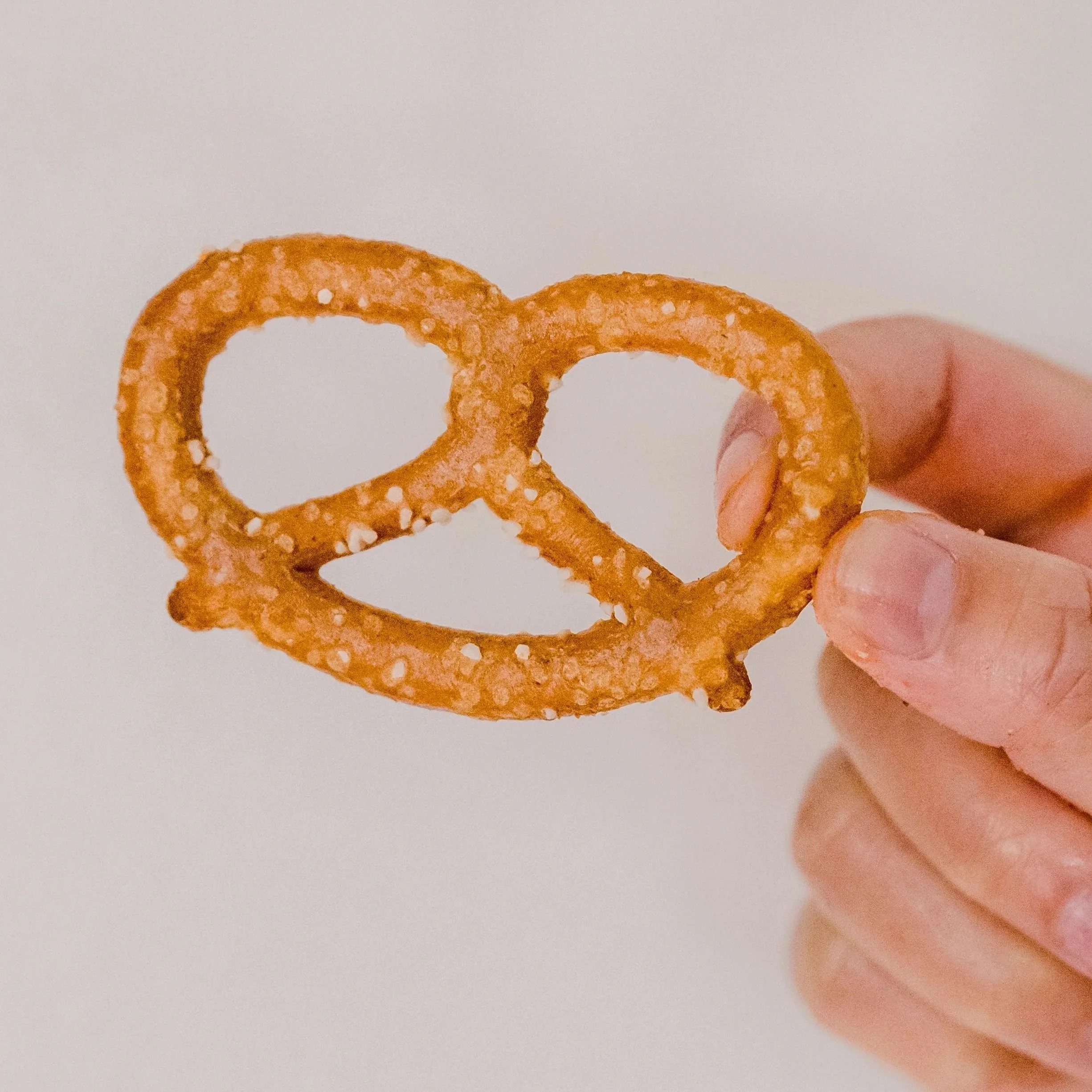
The essentials that don't leave my side, park to park:
Electrolyte packets — mix into free ice water from any quick-service counter
Salty snacks — pretzels, chips, anything to help maintain blood volume throughout the day
A portable neck fan — genuinely one of the best purchases I've made for park days
A cooling towel
A small sun umbrella or wide-brimmed hat — keeping direct sun off my face makes a bigger difference than I expected
(I've linked my full POTS packing list below if you want the complete rundown.)
The bag handles the physical side of things. The bigger strategy is how you actually move through the parks — which is where the scooter conversation comes in.
Getting Around
Choosing your scooter
You've got two options: renting inside the park, or renting from a third party.
Disney's in-park ECVs are available at the turnstiles of each park, first-come-first-served, with no reservations. They sell out on busy days, so you need to arrive at rope drop to guarantee one. And you can't take them past the park gates — if you're hopping parks, you return it and pick up a new one at the next one.
Third-party rentals (ScooterBug, Buena Vista Rentals, Gold Mobility, and similar companies) are reserved for your entire stay, so there's no rope-drop stress. They work outside the parks too — hotel hallways, parking lots, Disney transportation — and often come with better padding, sun shades, and USB charging.
For me, the third-party option wins for POTS specifically. Parking lots and long hotel walks are some of the worst flare triggers, and a park-only scooter leaves you exposed exactly when you need support most.
Using it on Disney transit
Once you've got your scooter, here's the good news — Disney's transportation system is genuinely well set up for it, and it's all included as part of your resort stay:
🚌 Buses — the driver loads you first via a hydraulic ramp, then secures your scooter with floor straps. Each bus holds two scooters at a time, so during peak times you may wait 20–40 minutes for the next one with space.
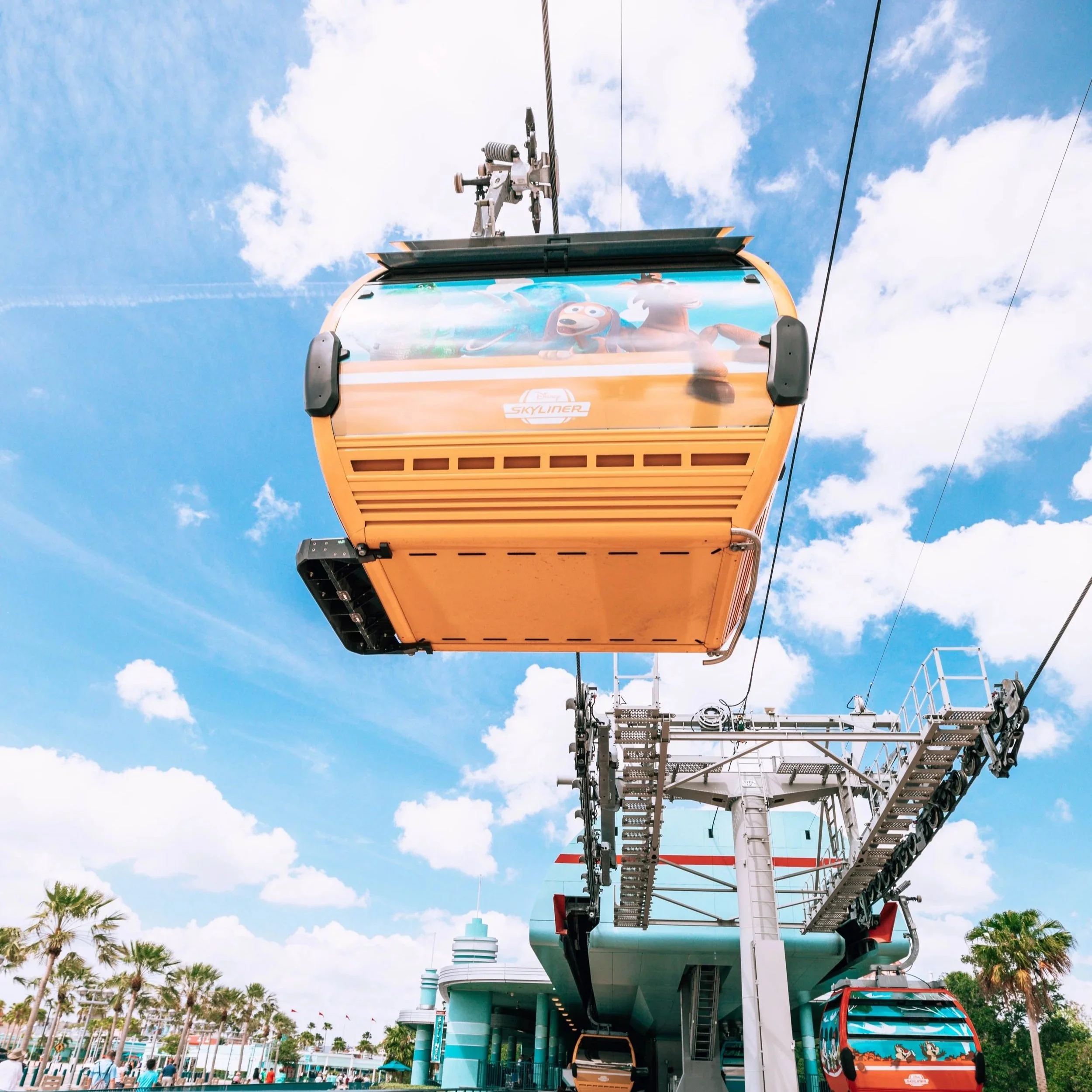
🚡 Skyliner — my favorite. Cast members direct you into a separate, stationary loading lane, so your cabin stays still while you drive on instead of trying to time a moving line. It has its own dedicated boarding loop, so it rarely has the long backups buses do.
🚊 Monorail — a cast member places a lightweight ramp over the gap, and you park in the center aisle. Multiple scooters can fit per train, and you stay seated for the ride.
🚢 Boats — large ferries and FriendShip boats are fully scooter-accessible via a level ramp. Smaller resort launches (like those serving Wilderness Lodge or Grand Floridian) have narrow openings and steps that scooters can't use — you'll take a bus instead if you're staying at one of those resorts.
Choosing where you stay
Since the Skyliner is my go-to for minimizing delays, resort choice actually matters more than people realize when you're managing POTS.
There are four official Skyliner resorts. Riviera Resort is my top pick if Epcot is a priority — it has its own dedicated station with a direct line, no transfer needed. Caribbean Beach Resort is the central hub of the whole system, but that means transferring lines to reach Epcot, Hollywood Studios, or the other resorts. Pop Century and Art of Animation share a station, both routed through the Caribbean Beach hub, so they also require a transfer.
If minimizing transfers matters most for your symptoms, Riviera is worth the splurge. If budget is the bigger factor, Pop Century or Art of Animation still get you Skyliner access — just with one extra stop.
Surviving the Heat
I mentioned earlier that heat is my number one trigger, so this is the section I take most seriously when I'm planning a trip.
A few small things help me build buffer time into hot, crowded days: leaving the resort 60–90 minutes before park opening, and waiting about an hour after fireworks before heading to the exits, since the mass-exodus crowd bottlenecks transit hard. And on the days when I do flare, every park has a First Aid Station — not just for emergencies. It's a cool, quiet room where you can lie down for a bit and reset before continuing your day.
Build in a real break, not just a quick one
Beyond ducking into AC here and there, I try to actually leave the parks during the hottest stretch of the afternoon and head back to the resort. Nothing fancy — just genuine rest, feet up, curtains closed, sometimes a real nap. It's a bigger time investment than grabbing a few minutes in an air-conditioned queue, but it resets me in a way nothing inside the park can. I head back out once the heat breaks in the evening, and I'm in a completely different place symptom-wise than if I'd tried to push through the afternoon.
This is another reason resort choice matters so much — the easier it is to get back to your room and back out again, the more realistic this kind of break actually is.
If leaving isn't an option
Not every trip allows for a midday resort break — maybe you're day-tripping without a hotel room, or the travel time back just isn't worth it for your itinerary. On those days, I lean harder into the AC refuge list below and treat a long table-service meal as my rest stop instead. Booking a sit-down lunch reservation during the peak heat window gives you real seated time, air conditioning, and a built-in reason to stay off your feet for an hour, even if you never leave the park.
But the real strategy is routing your day through air conditioning on purpose, not by accident. That means front-loading outdoor must-dos during the cooler morning hours, and deliberately steering the hottest part of the day through indoor spaces. Here's where I go, park by park.
Magic Kingdom(honestly, the toughest park for indoor options)
Hall of Presidents & Carousel of Progress — both over 15 minutes, comfortable seats, good spot to close your eyes for a few minutes
Country Bear Jamboree / Tiki Room — less comfortable seating, but fun, and Tiki Room is a few steps from Dole Whip
Mickey's PhilharMagic — my personal favorite pick here. Rarely a wait, and it's an easy escape from the worst bottleneck in Fantasyland
Restaurant breaks: Be Our Guest, Columbia Harbour House (ask for the quiet upstairs seating), Skipper Canteen, Pecos Bill
EPCOT(the best park for this strategy, by far)
Living with the Land & Gran Fiesta Tour — slow, relaxing boat rides, worth doing even without the heat factor
American Adventure — a 30-minute show with genuinely comfortable seating
Impressions de France — only shown at night, but the one World Showcase film with real seats
The Seas — a good low-effort option if you're traveling with little ones
World Showcase pavilion-hopping — slower pace, ducking into shops and restaurants between countries (just know the pavement between pavilions is still brutal)
DVC Lounge in the Imagination Pavilion — if you have DVC access, this is a real sit-down break with complimentary drinks
Hollywood Studios(genuinely low on indoor options — worth knowing before you go)
The Little Mermaid – A Musical Adventure — redone in 2025, live actors, cool and comfortable
Walt Disney Presents — an indoor gallery walk-through plus a short film
Tune-In Lounge / BaseLine Tap House — not as kid-friendly, but a solid option for an adult-only portion of your trip
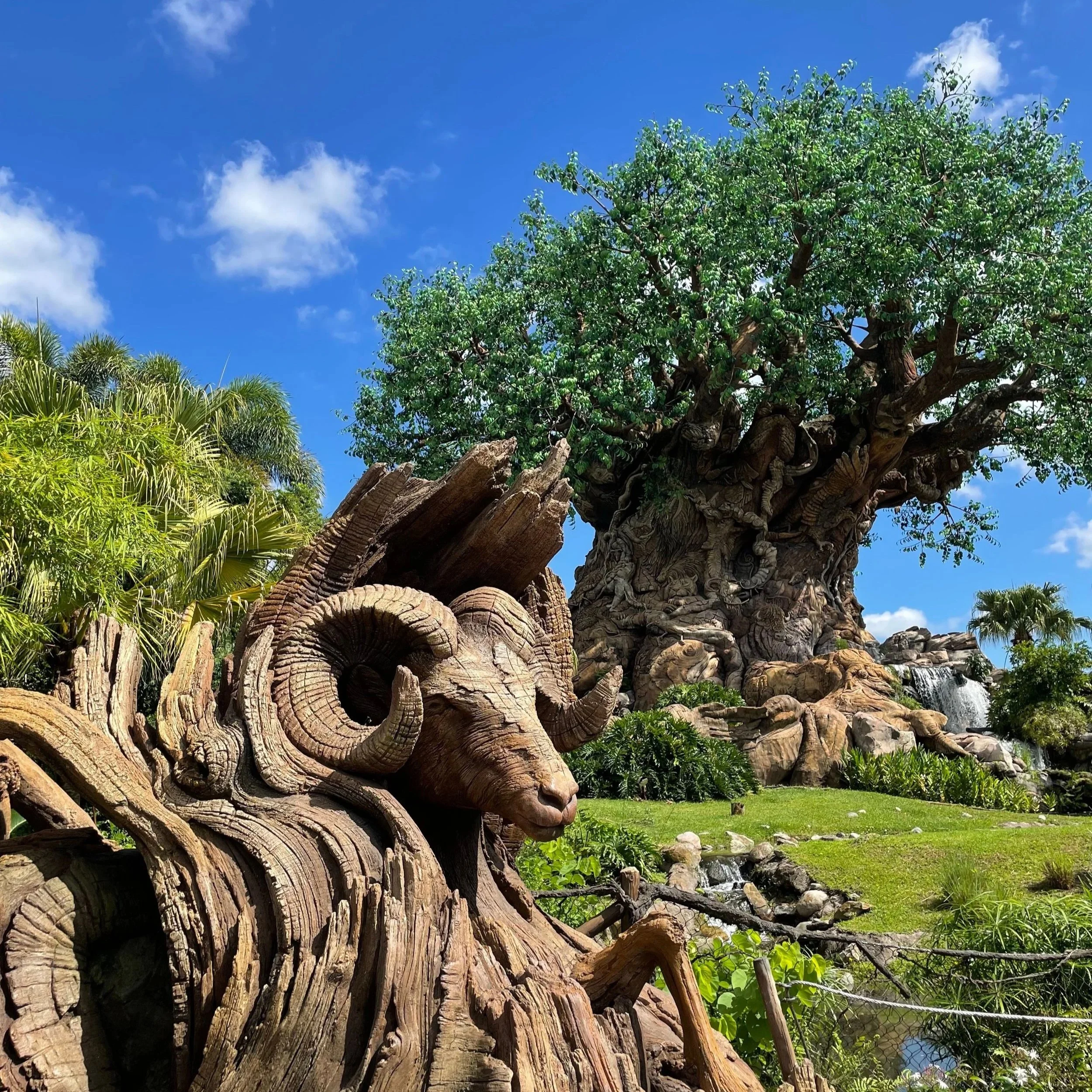
Animal Kingdom(the hottest park at WDW — plan around this one especially)
Festival of the Lion King — one of the best shows at WDW, heat break or not
Nomad Lounge — real couches, one of my favorite "feet hurt, need AC" stops
Satu'li Canteen (Pandora) — indoor seating and genuinely good food
Let a Travel Agent Carry the Rest
If reading all of this made your head spin a little, that's completely fair — it's a lot to track on top of everything else that goes into planning a Disney trip. This is exactly where having a travel agent in your corner makes a real difference.
I can help pre-arrange your third-party scooter rental so it's one less thing to coordinate the day you land. I build park strategies that front-load outdoor plans during the cooler morning hours and route your hottest afternoon hours through AC breaks and rest. And I time your dining reservations with intention — a table-service meal isn't just food, it's a built-in sit-down break with real seating, right when you need it most.
If juggling all of this on your own sounds exhausting before you've even left home, that's exactly what I'm here for — I build Disney trips around how you actually need to move through the parks, not just where to go. Fill out the form.
